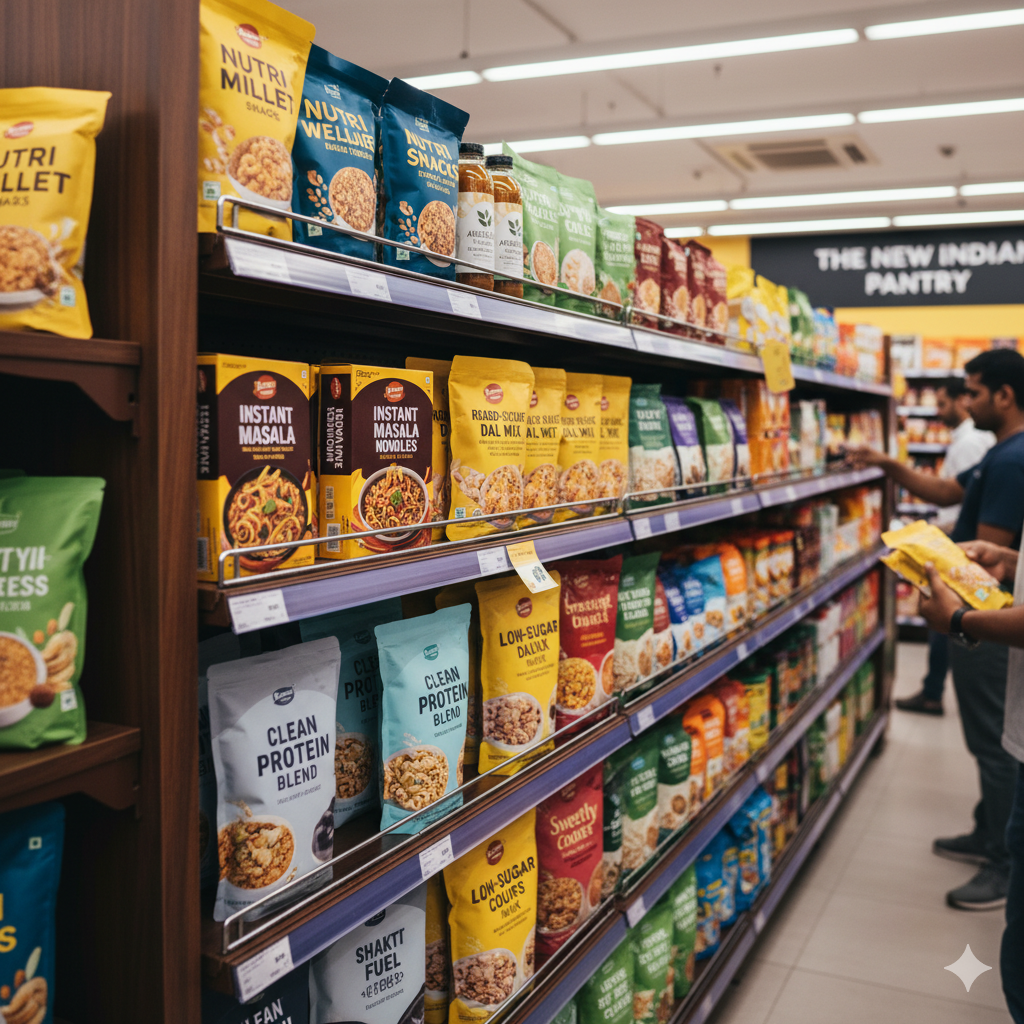
In India today, the food business is changing fast. More entrepreneurs and small brands want to offer healthy convenience foods (like noodles and pasta), but setting up a factory is expensive, complex, and time-consuming.
That’s where private labelling steps in. With this model, you can launch your own brand without building your own factory.
Why private labelling is reshaping India’s food industry
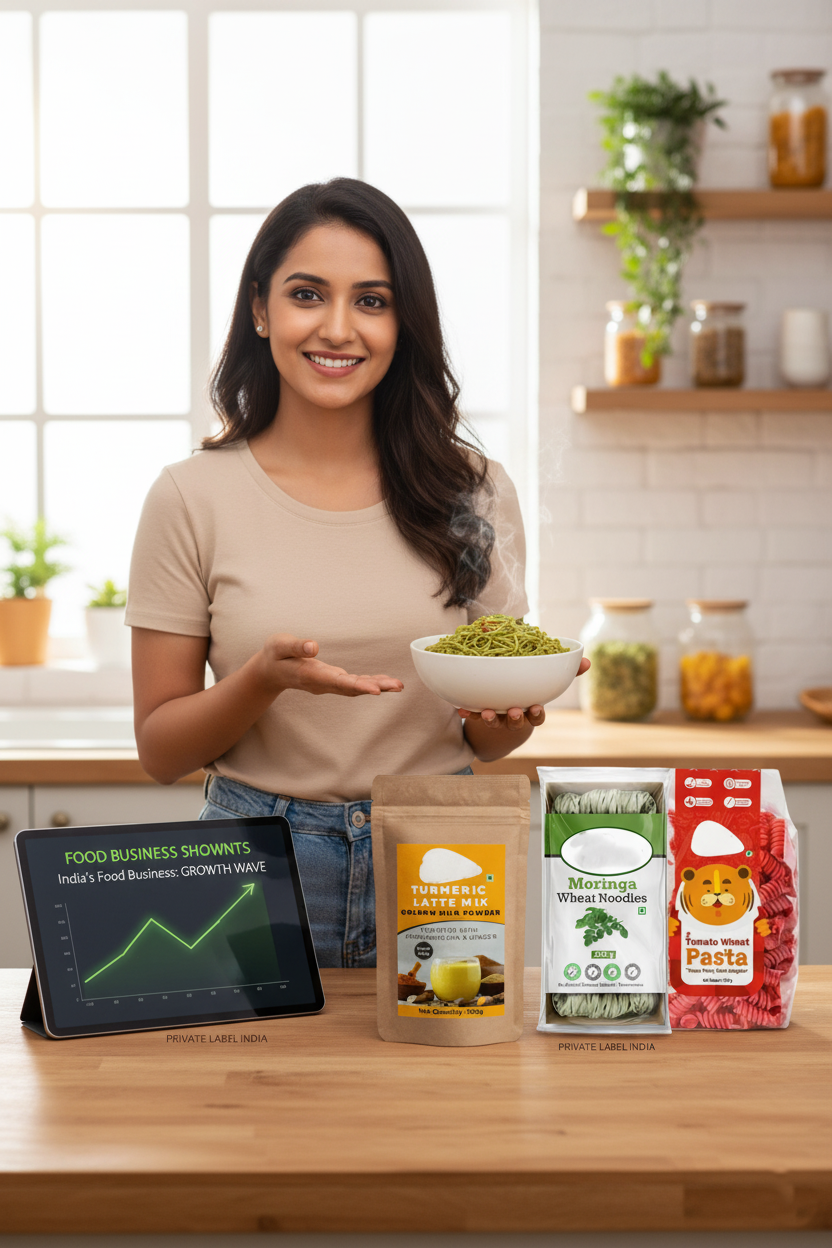
1. The Indian private label packaged food market is expected to grow from around US$12,499 million in 2024 to US$17,987 million by 2030 at a CAGR of ~6.3%. Grand View Research
2. Private-label foods (products made by a manufacturer, sold under a brand that doesn’t own the manufacturing) are gaining acceptance in India’s retail sector. Statista+2LinkedIn+2
3. Consumers are increasingly open to value-for-money, good quality products, helping private label brands grow.
Why healthy convenience foods are a strong category
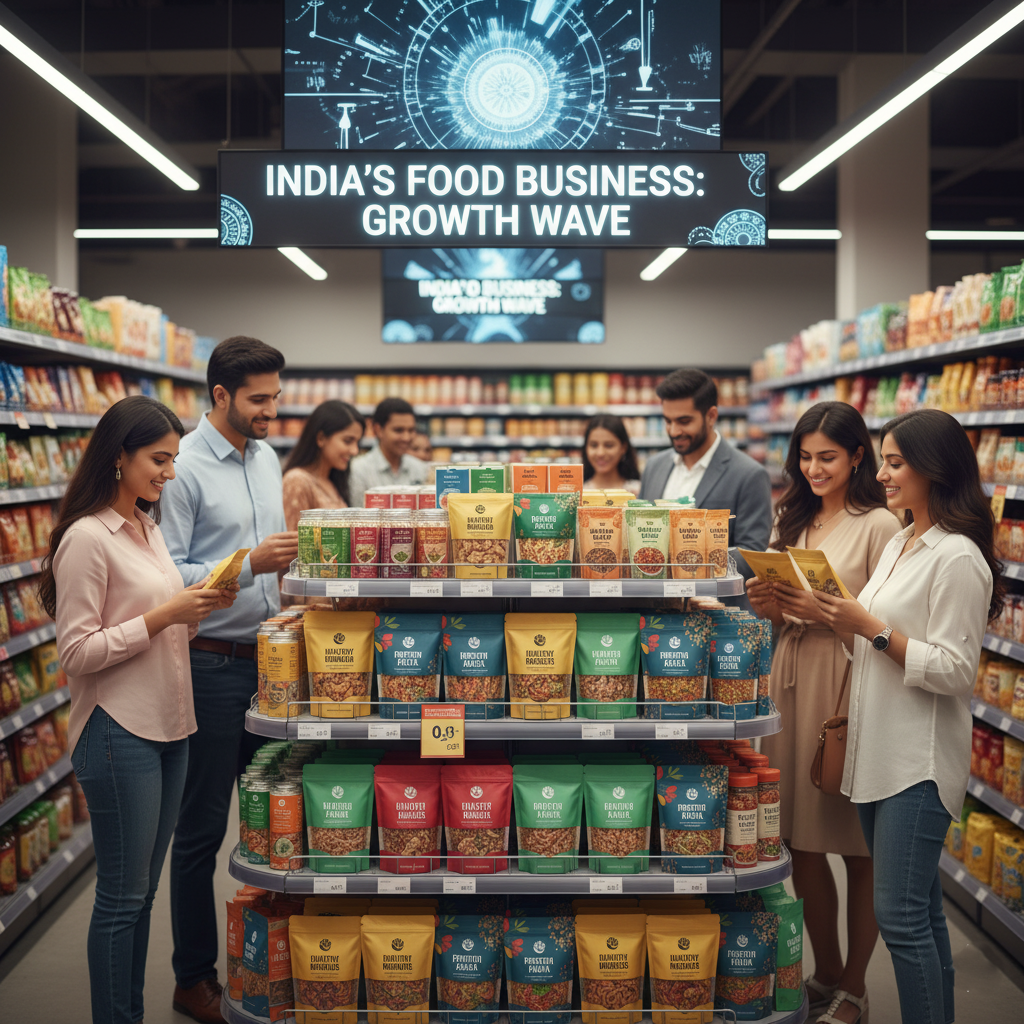
1. India’s food consumers are looking for convenience and health together: ready-to-eat or easy-to-cook products with clean ingredients.
2. Products like high-quality noodles, pasta made from alternative grains, or healthier snack foods align well with this trend.
3. Using a private-labelling model makes it easier to enter these categories quickly, test the market, and scale up without heavy capital
How small sellers can start with low MOQ (Minimum Order Quantities)
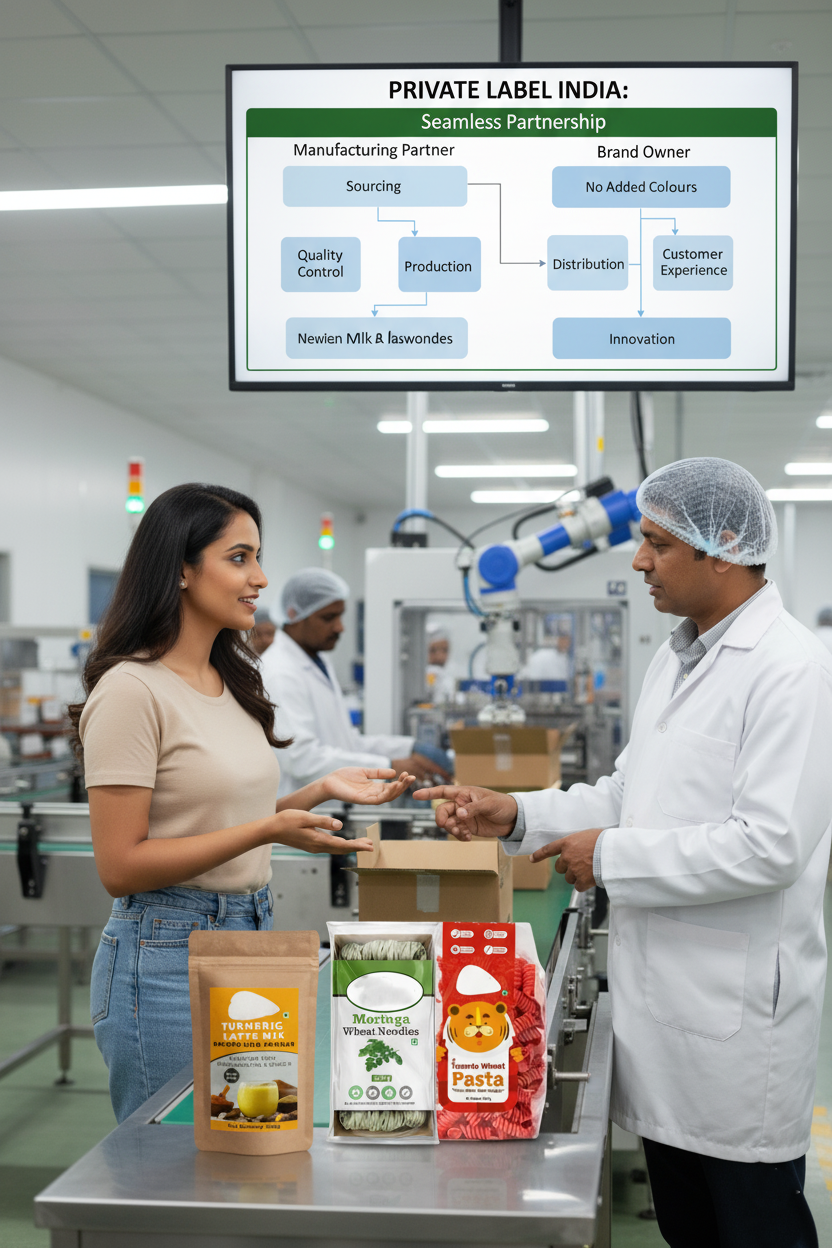
1.Find a contract manufacturer or private-label producer who allows low MOQs (so you don’t need to order huge volumes upfront).
2. Select a product formula (for example: pasta from millet or healthy noodles) that suits your brand promise
3. Design your brand & packaging. Your brand looks the way you want, while the manufacturer handles production
4. Start small, test demand, launch online, gauge customer feedback, and refine product or packaging.
5. Scale once demand is validated, increase production and expand into offline stores
Role of your factory/manufacturing partner
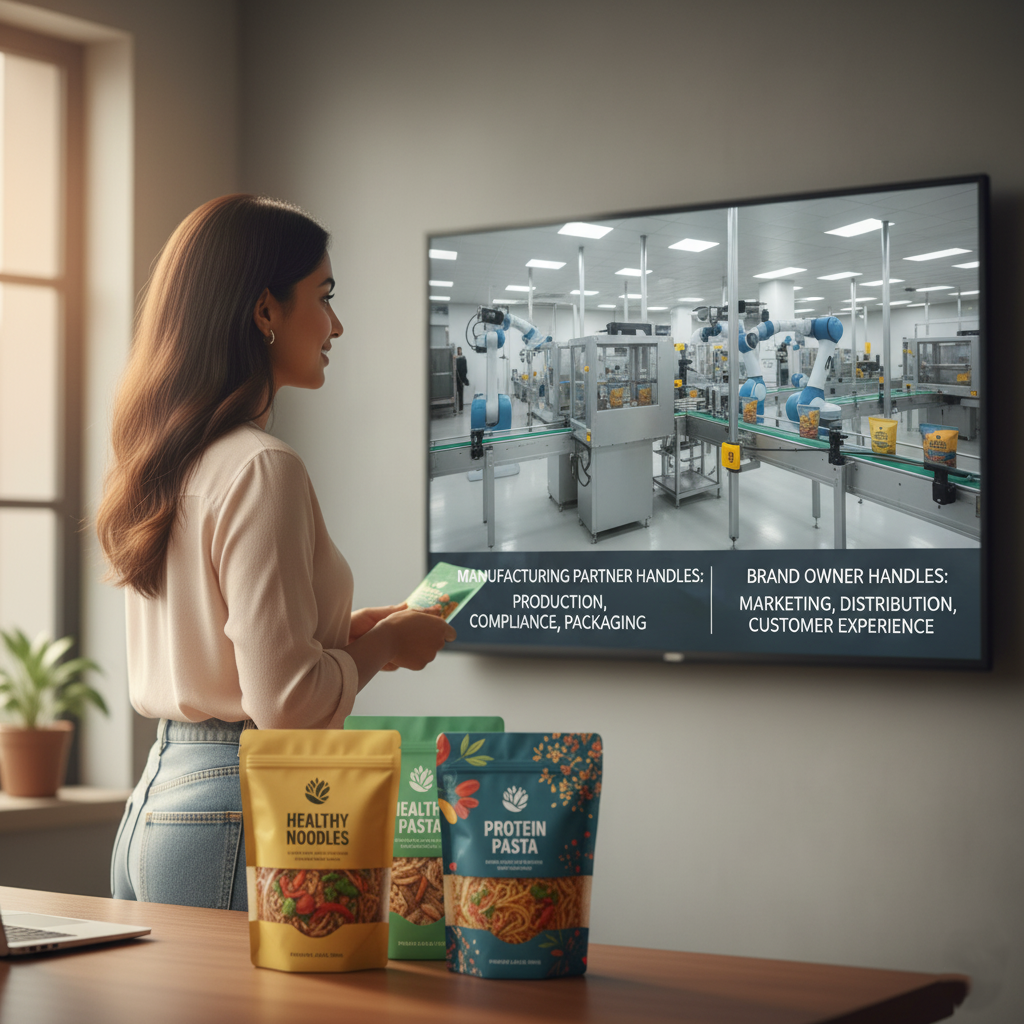
1. The manufacturing partner handles raw material sourcing, compliance (licences, certifications), production, and packaging.
2. Your role is the brand owner: marketing, distribution, customer experience.
3. This model reduces capital risk and shortens time-to-market.
4. Because the industry is growing, being able to offer high-quality, private-label healthy convenience foods gives you a competitive advantage.
Final thoughts
The future of the Indian food business is ripe for private labelling. If you’re a small seller or brand builder with a healthy food idea, starting without a factory is not just possible, it’s smart.
With the right manufacturing partner, a clear brand idea (like “healthy noodles” or “Millet pasta”), and efficient marketing, you can ride this growth wave and position yourself as a leader in the healthy convenience category
Ready to Start?
Private Label Food Manufacturing Services
Link To:https://yourfoodfactory.in/